
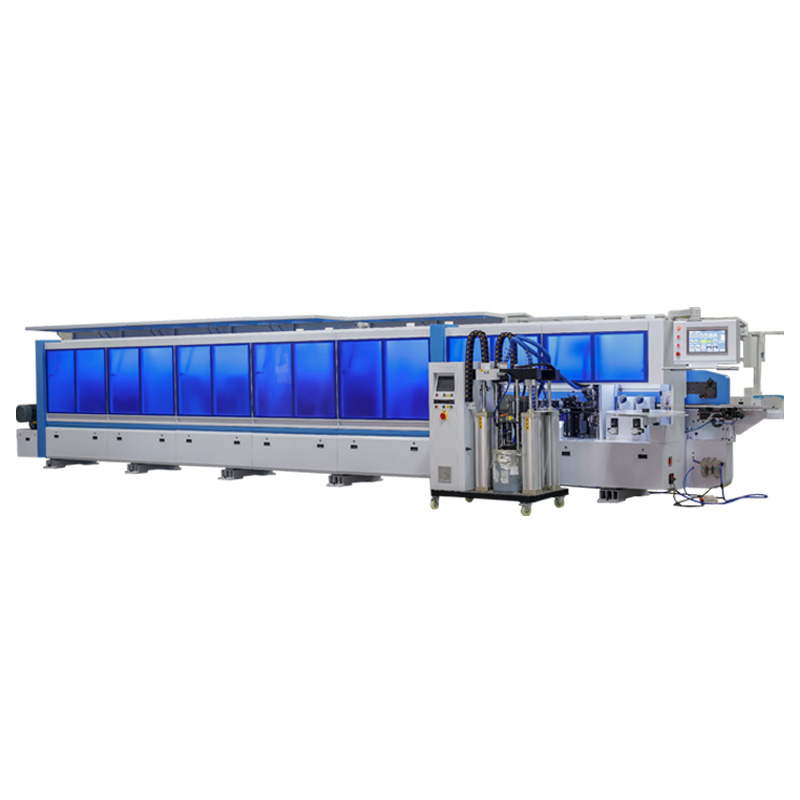
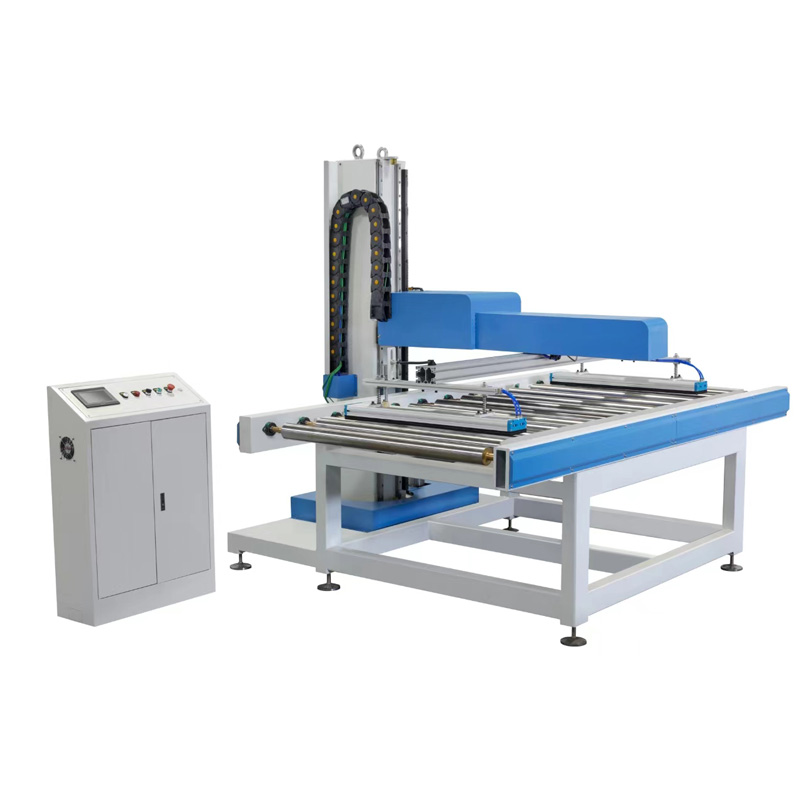
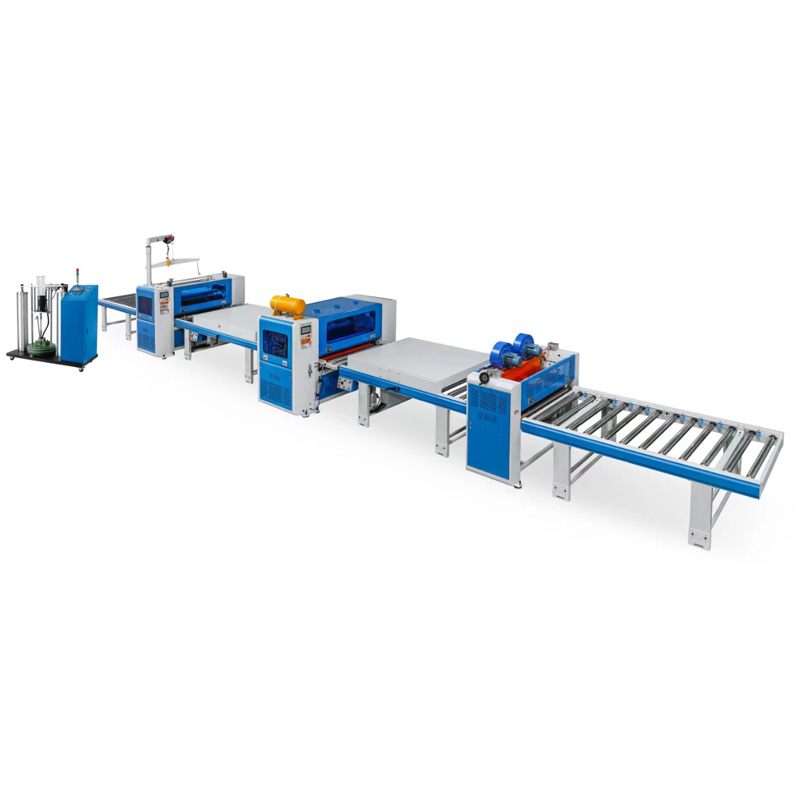
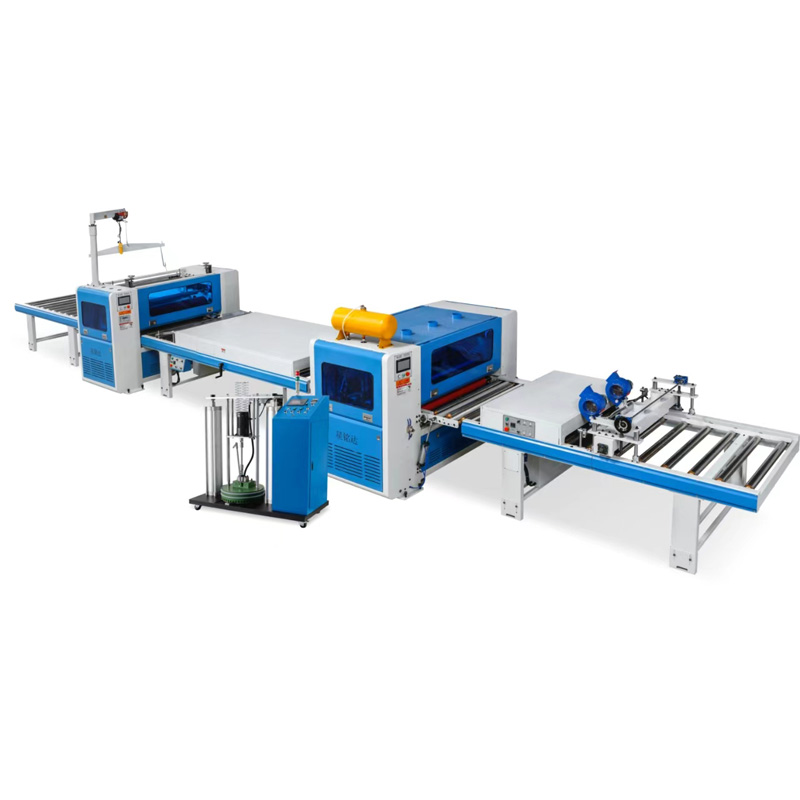
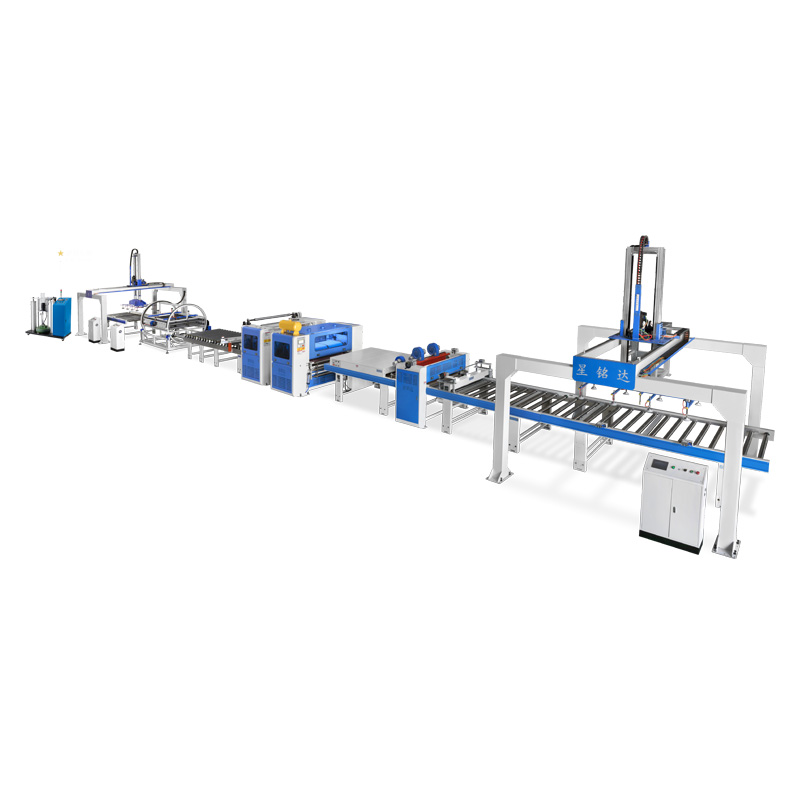
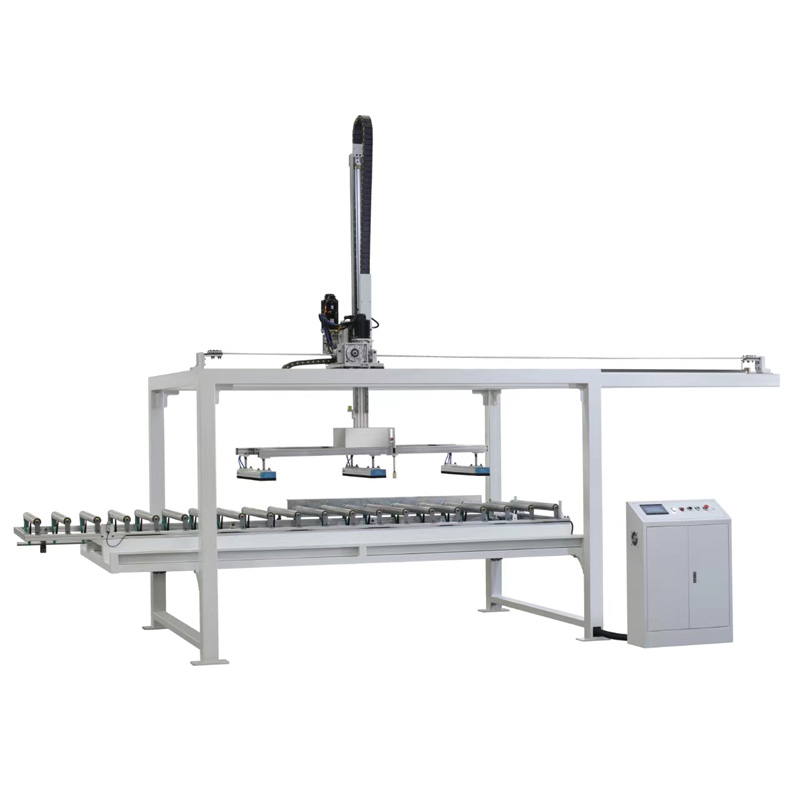
Choosing a PUR wrapping machine is not simply about comparing machine prices or maximum speed.
For furniture manufacturers, building-material producers, door and window manufacturers, and decorative-profile suppliers, the more important question is:
Can the wrapping machine handle the actual profile shape, wrapping material, adhesive requirements, and production volume of your factory?
Today, let's talk about how to choose a suitable wrapping machine.
If your products include profiles with angles, grooves, concave and convex surfaces, arcs, or other irregular sections, a standard flat-panel laminating machine may not be the right solution.
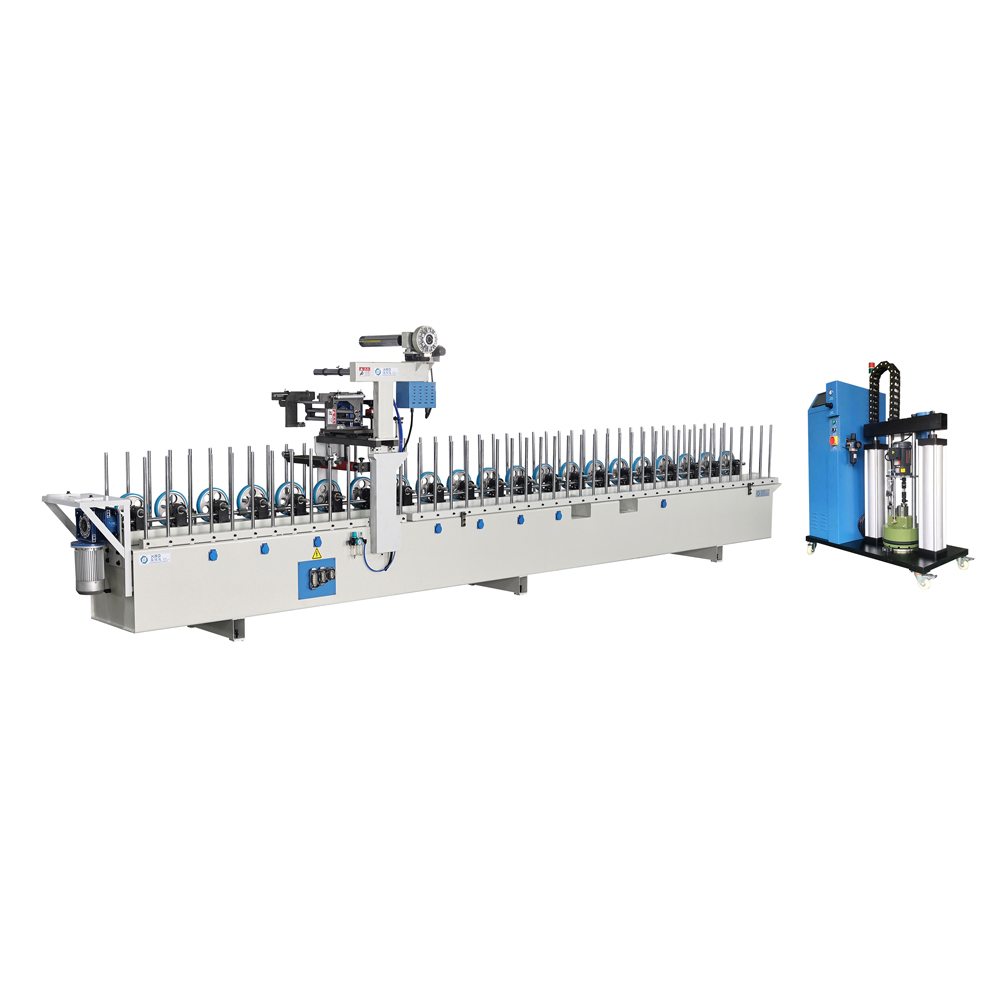
In this situation, a 300mm PUR Wrapping Machine can be considered for profile wrapping applications where controlled adhesive application and pressure forming are required.
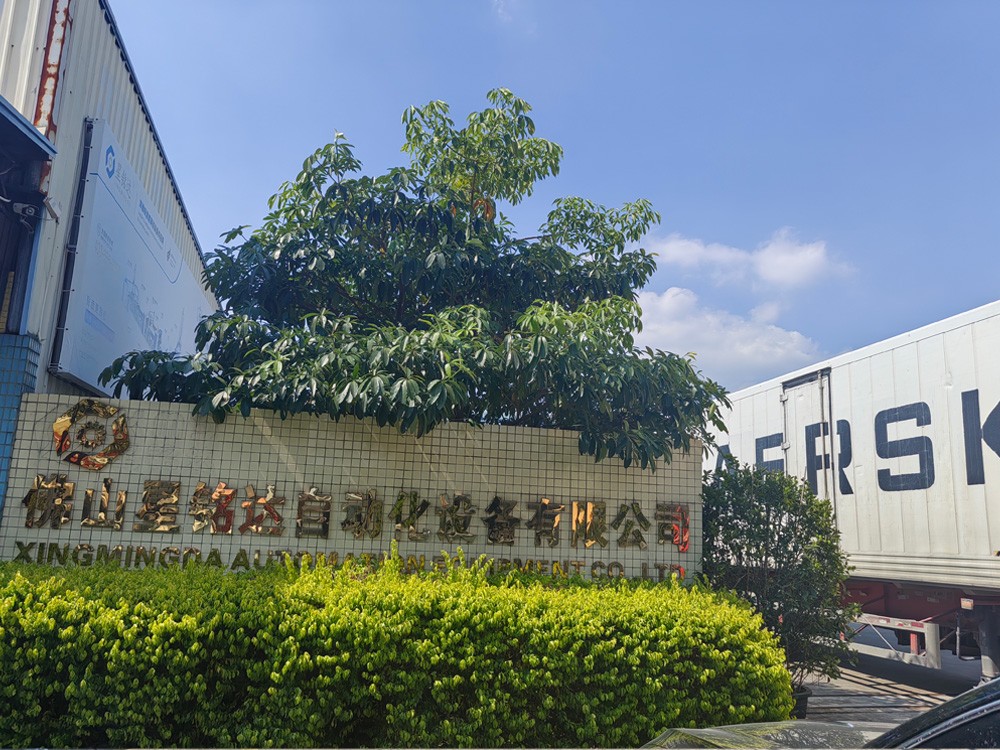
Manufactured by Foshan xingmingda automatic Woodworking machinery Co.,Ltd, the machine is designed for profile surface wrapping and can be configured for applications involving PVC, PET, melamine and other suitable decorative materials.
The key is to choose the machine according to the product geometry and production process, rather than simply choosing the machine with the largest working width.
1. Are Your Profiles Too Complex for a Standard Wrapping Machine?
Before purchasing a wrapping machine, look closely at the product cross-section.
Is the surface completely flat?
Or does the profile contain:
Angles
Grooves
Concave surfaces
Convex surfaces
Arcs
Curved edges
Rolled edges
Decorative lines
Multiple transitions within one profile?
This distinction matters.
A flat decorative panel and a shaped profile do not create the same wrapping challenge.
For flat surfaces, the main concerns are usually film alignment, adhesive application, pressing and surface quality.
For complex profiles, the wrapping material needs to follow the geometry of the substrate while maintaining sufficient contact and stable pressure.
If the equipment cannot properly follow the profile shape, manufacturers may encounter:
Film lifting
Wrinkles
Incomplete surface contact
Poor adhesion in grooves
Uneven edges
Material shifting
Inconsistent decorative appearance
Higher material waste
Therefore, the first purchasing question should be:
What is the actual cross-section of the product I need to wrap?
Not:
“Which wrapping machine has the highest speed?”
2. Why Choose a 300mm PUR Wrapping Machine for Profile Applications?
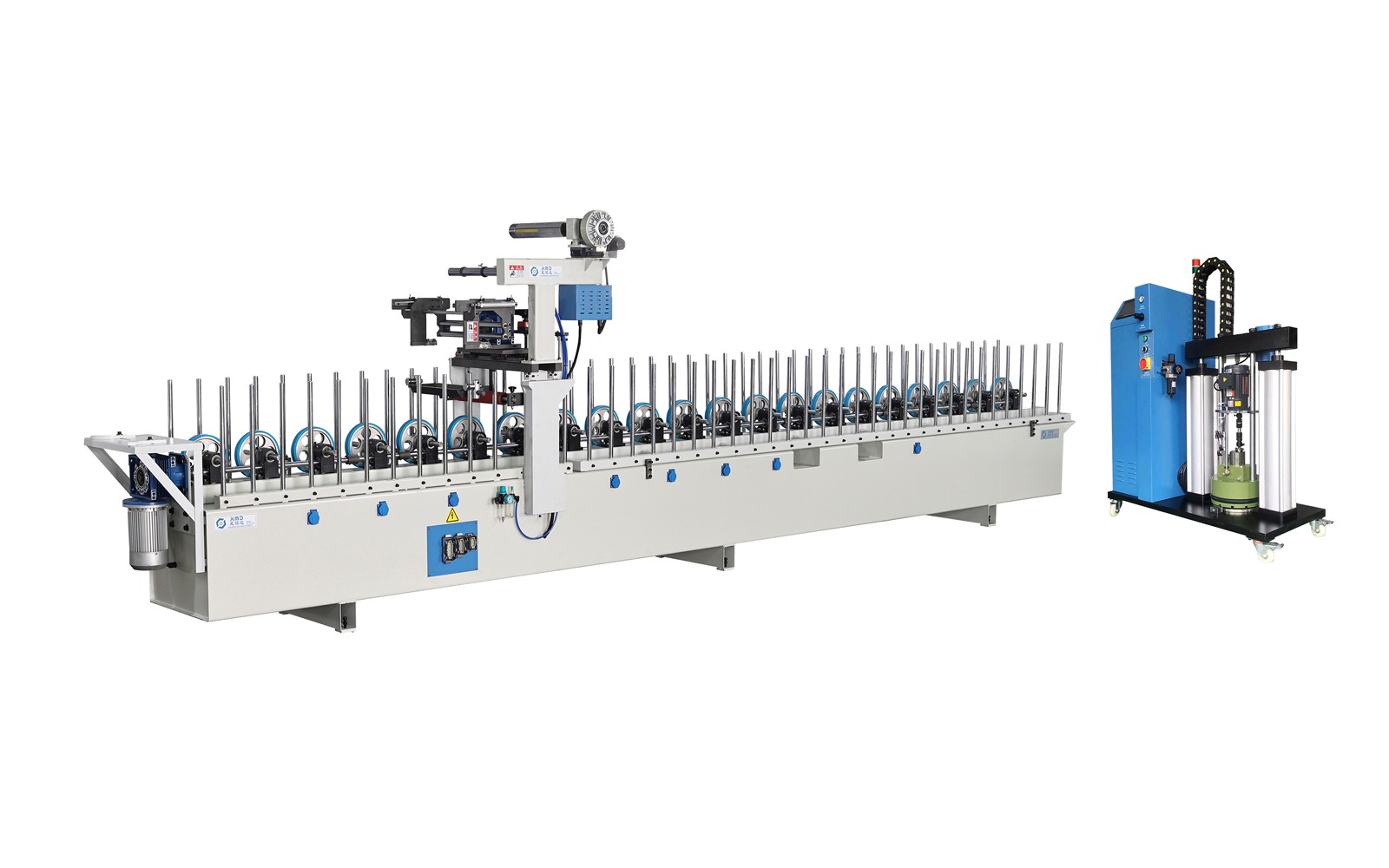
The 300mm PUR Wrapping Machine is designed for profile-oriented applications where the maximum firm covering width is up to 300mm.
According to the current machine specification, the equipment can process products with a maximum processing thickness of 90mm, a minimum processing length of 600mm, and a feeding speed of up to 1–60 m/min.
This configuration makes it particularly relevant to manufacturers producing decorative profiles and shaped components rather than only large flat panels.
The machine can work with suitable decorative materials and is designed around a PUR adhesive system.
Its process can be understood as:
Profile feeding → PUR adhesive application → decorative film guiding → pressure wrapping → surface forming → finished profile
The purpose is not merely to attach a film to a profile.
The objective is to maintain stable contact between the decorative material and the profile geometry throughout the wrapping process.
3. What Makes PUR Wrapping Suitable for Complex Profiles?
The adhesive system is one of the most important factors in profile wrapping.
A complex profile may contain several surface transitions.
For example:
Flat surface → groove → convex section → arc → edge
The decorative material must follow these changes without excessive tension or loss of contact.
PUR hot melt adhesive can be considered for applications requiring strong bonding and durable adhesion.
However, buyers should not assume that any PUR adhesive will automatically work with every film and substrate.
The complete combination needs to be evaluated:
Substrate + PUR adhesive + decorative film + machine settings + pressure + production speed
This is why sample testing is valuable before final equipment selection.
4. Can the 300mm PUR Wrapping Machine Handle PVC, PET and Melamine?
Material compatibility should be confirmed before purchasing the machine.
The 300mm PUR profile machine is intended for applications involving suitable decorative materials, and the manufacturer's product information specifically describes PVC/PVC plastic film applications and complex profile surfaces.
For buyers considering PVC, PET, melamine or other decorative materials, the correct approach is to evaluate the actual material rather than assuming that all decorative films behave in the same way.
PVC Film
PVC is widely used for decorative furniture and building-material profiles.
When using PVC, buyers should check:
Film thickness
Surface treatment
Film flexibility
Adhesive compatibility
Required wrapping temperature
Profile geometry
PET Film
PET-based decorative materials can have different surface characteristics from PVC.
Therefore, buyers should confirm:
Surface energy
Adhesive compatibility
Film flexibility
Required processing conditions
Final bonding requirements
Melamine Decorative Material
Melamine-based decorative surfaces may also require specific process conditions depending on their structure and application.
The important point is:
Do not select a wrapping machine based only on the name of the decorative material.
Provide actual samples or detailed technical information to the machine supplier whenever possible.
5. What Technical Parameters Should Buyers Check?
A procurement team should create a technical checklist before comparing different PUR wrapping machine manufacturers.
For the current 300mm PUR Profile Machine configuration, the main published parameters include:
| Parameter | 300mm PUR Profile Machine |
|---|---|
| Maximum firm covering width | 300 mm |
| Maximum processing thickness | 90 mm |
| Minimum processing length | 600 mm |
| Feeding speed | 1–60 m/min |
| Heating power | 12.5 kW |
| Overall dimensions | 6000 × 600 × 1800 mm |
| Machine weight | 2500 kg |
| Maximum roll cover-material diameter | 400 mm |
| Maximum cover-film width | 600 / 900 / 1200 mm |
| Feeding motor power | 1.5 kW |
These are published machine specifications and should still be confirmed against the final configuration quoted for your project.
PUR Glue System
The published configuration also specifies a PUR glue system with:
20 kg / 5-gallon barrel size
AC 220V / 50Hz
1.5 kW heating power
20–180°C temperature control
0.4–0.8 MPa working pressure
Standard 1-way / 2-way hose output
These details are particularly important when comparing suppliers because the adhesive system directly influences the wrapping process.
6. Why Should Buyers Look at the Profile Cross-Section Before Ordering?
This is one of the most frequently overlooked purchasing issues.
Suppose two products are both 200mm wide.
At first glance, they appear to require the same machine.
But Product A has a simple flat surface.
Product B contains:
Two grooves
One convex section
One curved edge
Several changes in surface direction
The actual wrapping difficulty can be completely different.
Therefore, when requesting a quotation, send the supplier:
Product drawing + profile dimensions + cross-section + wrapping material + adhesive information
A CAD drawing is particularly useful for complex profiles.
The supplier can then determine whether the standard pressure-wheel and guiding configuration is suitable or whether additional adjustments are required.
7. What Applications Can Use a 300mm PUR Wrapping Machine?
The machine is suitable for a range of profile-oriented applications.
Furniture Decorative Profiles
Furniture manufacturers can use wrapped profiles for:
Cabinet components
Wardrobe decoration
Decorative strips
Furniture mouldings
Table components
Interior trim
The final appearance is particularly important because decorative profiles are often highly visible.
Doors and Windows
Door and window manufacturers may require decorative wrapping for shaped components and trim profiles.
The ability to follow angles, grooves and curved surfaces becomes especially important for these products.
Building Materials
The machine can also be considered for suitable building-material profiles where decorative surface wrapping is required.
Interior Decoration
Interior decoration projects often involve customized profile shapes.
Examples include:
Decorative lines
Wall-panel accessories
Interior mouldings
Architectural trim
Decorative strips
Aluminum, MDF, HDF and Other Suitable Profiles
The manufacturer's current product information lists applications involving decoration materials, furniture, tabletops, doors and windows, decorative strips, and suitable materials including aluminum, MDF, HDF, chipboard and plastic materials.
The exact combination should be confirmed through product testing before mass production.
8. Should You Choose a 300mm, 600mm or 1300mm Wrapping Machine?
This is an important purchasing decision.
The answer depends on the product portfolio.
Choose a 300mm-class machine when:
Your main products are profiles.
The maximum firm wrapping width is within 300mm.
Products contain grooves, arcs, concave or convex surfaces.
You need a dedicated profile-wrapping process.
Your products are mainly decorative strips or shaped components.
Consider a wider machine when:
You process wider boards or panels.
Your product width exceeds the effective range of a 300mm machine.
You need to wrap larger flat components.
Your production portfolio includes both panels and profiles.
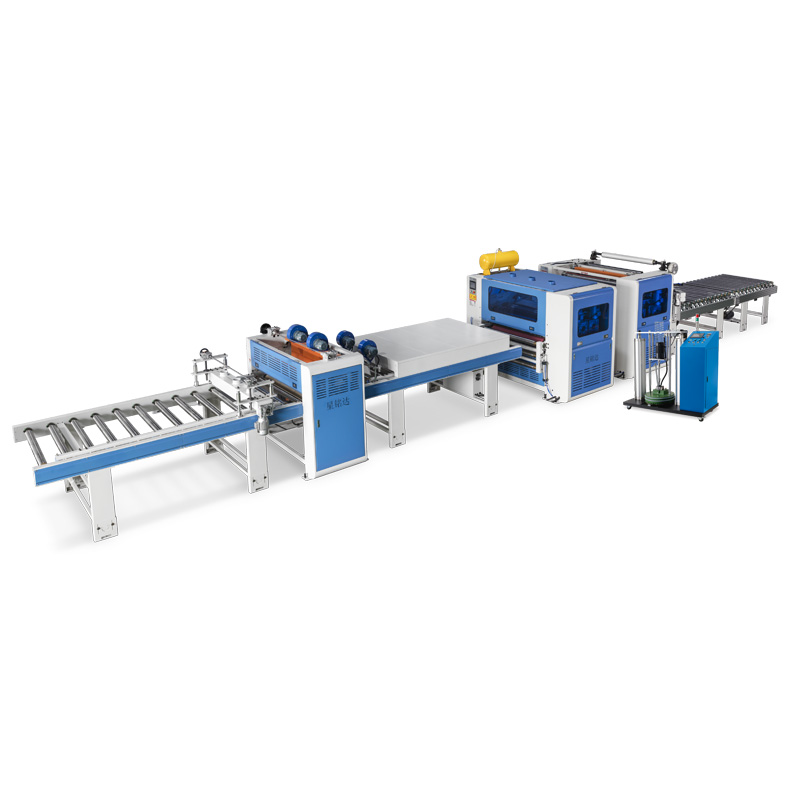
For example, Xingmingda also lists 600mm PUR Panel Wrapping Machine and 1300 PUR Wrapping Machine configurations in its product range.
Therefore, buyers should not simply ask:
“Which machine is better?”
The more useful question is:
“Which working width and wrapping structure match my actual product range?”
9. What Should You Check Before Buying a PUR Wrapping Machine?
Before requesting a quotation, prepare the following information.
Product Information
Product name
Substrate
Length
Width
Thickness
Profile cross-section
Minimum and maximum dimensions
Decorative Material
PVC
PET
Melamine
Wood veneer
Other decorative material
Adhesive
PUR hot melt
Existing adhesive brand
Required bonding performance
Glue consumption, if available
Production Requirements
Required meters per minute
Daily production
Number of product specifications
Expected future production volume
Factory Conditions
Voltage
Frequency
Available installation space
Existing production-line equipment
Compressed-air conditions
Quality Requirements
Surface appearance
Edge adhesion
Groove adhesion
Curved-surface adhesion
Acceptable tolerance
This information gives the machinery manufacturer enough technical context to recommend a suitable configuration.
10. Why Should You Test Your Actual Profile Before Ordering?
For complex profile wrapping, sample testing can be more useful than a catalogue specification.
A machine may technically meet the required width, but the real question is whether it can produce the required finished surface.
A proper test should evaluate:
Film feeding
Does the film remain correctly aligned?
Adhesive application
Is the PUR adhesive distributed consistently?
Profile forming
Can the film follow the groove, arc, concave and convex sections?
Pressure
Does the pressure system maintain sufficient contact?
Surface quality
Are there visible wrinkles, bubbles or lifting areas?
Production stability
Can the process remain stable at the required working speed?
This is why Foshan xingmingda automatic Woodworking machinery Co.,Ltd recommends discussing the actual product and processing requirements before finalizing a wrapping-machine configuration.
11. How Does Xingmingda Build a Profile Wrapping Solution?
Foshan xingmingda automatic Woodworking machinery Co.,Ltd is based in Lunjiao, Shunde, Foshan, a major woodworking-machinery manufacturing area in China.
The company specializes in the design and production of:
PUR Wrapping Machines
Cold Glue Wrapping Machines
Hot-Melt Coating Machines
PUR Hot-Melt Laminating Machines
Edge Banding Machines
Slotting Machines
Automatic Feeding Equipment
The company's website currently lists more than 100 countries served, a 10,000㎡ factory area, and more than 100 employees.
For a profile-wrapping project, the solution process can be organized into several stages.
Stage 1 — Product Analysis
Review product drawings, dimensions and surface geometry.
Stage 2 — Material Analysis
Confirm substrate and decorative-material characteristics.
Stage 3 — Adhesive Evaluation
Confirm whether PUR hot melt adhesive is appropriate for the material combination.
Stage 4 — Machine Configuration
Determine:
Working width
Pressure-wheel arrangement
Glue application
Film guiding
Feeding
Heating
Scraper system
Control configuration
Stage 5 — Sample Verification
Run the customer's actual product and wrapping material where required.
Stage 6 — Production Configuration
Finalize the machine configuration according to the confirmed production requirements.
This is more reliable than choosing a machine only from a catalogue photograph.
12. What Makes the 300mm PUR Profile Machine Different?
The main difference is not simply its 300mm working width.
The machine is designed around profile wrapping.
Its published configuration includes a wrapping system using pressure wheels and a scraper/glue-application system, while the manufacturer specifically describes applications involving angles, arcs, concave and convex surfaces, grooves and rolled edges.
This makes the machine particularly relevant when the production challenge is not simply:
“How do I cover a flat board?”
but rather:
“How do I consistently wrap a decorative material around a complex profile?”
That is a very different production requirement.
13. Procurement Decision: Is a 300mm PUR Wrapping Machine Right for You?
Before purchasing, ask yourself seven questions:
1. What is my maximum wrapping width?
If it is within 300mm, the machine may fit the basic dimensional requirement.
2. What is my maximum product thickness?
The published configuration supports up to 90mm processing thickness. Confirm your actual product range with the supplier.
3. Does my profile contain complex geometry?
If your products include grooves, arcs, concave and convex surfaces, discuss these features with the supplier before ordering.
4. What decorative material will I use?
PVC, PET, melamine and other materials may require different process evaluation.
5. What adhesive will I use?
Confirm PUR adhesive compatibility before production.
6. What production speed do I need?
The published feeding-speed range is 1–60m/min, but actual stable production speed depends on the product, material, adhesive and process conditions.
7. Can the supplier support future changes?
If you expect new profile shapes or decorative materials in the future, discuss these requirements before machine manufacturing.
14. From Product Question to Factory Solution
A professional purchasing process should follow a clear path:
Your Product
↓
Profile drawing + dimensions + substrate
↓
Your Decorative Material
PVC / PET / Melamine / other
↓
Your Adhesive
PUR hot melt adhesive
↓
Technical Evaluation
Width + thickness + geometry + production speed
↓
Machine Configuration
Feeding + glue application + pressure wheels + scraper + film guiding
↓
Sample Testing
Check adhesion + surface appearance + profile coverage
↓
Final Quotation
Machine specification + optional functions + delivery + installation support
↓
Production
Commissioning + operator training + stable batch production
This process reduces the risk of selecting a machine based only on a product title or catalogue image.
15. How to Request a Quote for a 300mm PUR Wrapping Machine
If you are looking for a 300mm PUR wrapping machine, send the following information to the supplier:
Product: What profile do you need to wrap?
Dimensions: Length × width × thickness.
Profile shape: Flat / angle / groove / concave / convex / arc / mixed geometry.
Substrate: MDF / HDF / PVC / aluminum / chipboard / other.
Wrapping material: PVC / PET / melamine / veneer / other.
Adhesive: PUR hot melt or existing adhesive specification.
Required speed: Target meters per minute.
Production volume: Daily or monthly output.
Machine quantity: Number of production lines required.
Power supply: Local voltage and frequency.
Providing this information allows Foshan xingmingda automatic Woodworking machinery Co.,Ltd to evaluate your application more accurately.
FAQ: 300mm PUR Wrapping Machine
What is a 300mm PUR wrapping machine used for?
A 300mm PUR wrapping machine is primarily designed for profile-oriented wrapping applications where the maximum firm covering width is within approximately 300mm. It can be used for suitable furniture, building-material, door, window and decorative-profile applications.
Can the machine wrap grooves and curved surfaces?
The manufacturer's published specification states that the machine can cover angles, arcs, concave and convex surfaces, grooves and rolled edges. Actual performance should be verified using the customer's profile and wrapping material.
Can I use PVC film?
Yes, the current product specification describes PVC/PVC plastic-film applications. The exact film specification should be confirmed before production.
Can PET or melamine be used?
Potentially, depending on the specific material, surface treatment, adhesive compatibility and profile geometry. Buyers should provide material samples or technical specifications for evaluation.
What is the maximum processing thickness?
The published 300mm PUR Profile Machine specification lists a maximum processing thickness of 90mm.
What is the feeding speed?
The published specification lists a feeding speed of 1–60m/min. Actual production speed should be evaluated under the customer's specific product and material conditions.
Can the machine be customized?
The machine configuration can be discussed according to product dimensions, profile geometry, wrapping material, adhesive, production capacity and factory requirements.
What should I send before asking for a quotation?
Send product drawings or photographs, dimensions, substrate, profile cross-section, wrapping material, adhesive information and required production speed.
Conclusion: Choose the PUR Wrapping Machine According to Your Profile
Choosing a PUR wrapping machine starts with understanding the product.
If your profiles contain angles, grooves, concave surfaces, convex surfaces, arcs or rolled edges, the wrapping process requires equipment designed to follow more complex geometries.
For products within its working range, the 300mm PUR Wrapping Machine provides a dedicated profile-wrapping solution with a published maximum firm covering width of 300mm, maximum processing thickness of 90mm and feeding speed of up to 60m/min.
The right purchasing process is therefore:
Define the profile → confirm the material → evaluate the adhesive → check machine parameters → test the actual product → finalize the configuration.
That approach is more useful than simply comparing machine prices.
If you are evaluating a 300mm PUR Wrapping Machine for PVC, PET, melamine or other decorative-profile applications, contact Foshan xingmingda automatic Woodworking machinery Co.,Ltd with your product drawing and material information for a technical evaluation.
Email: pattypeng@purmachinefactory.com
Official Website: www.purmachinefactory.com