
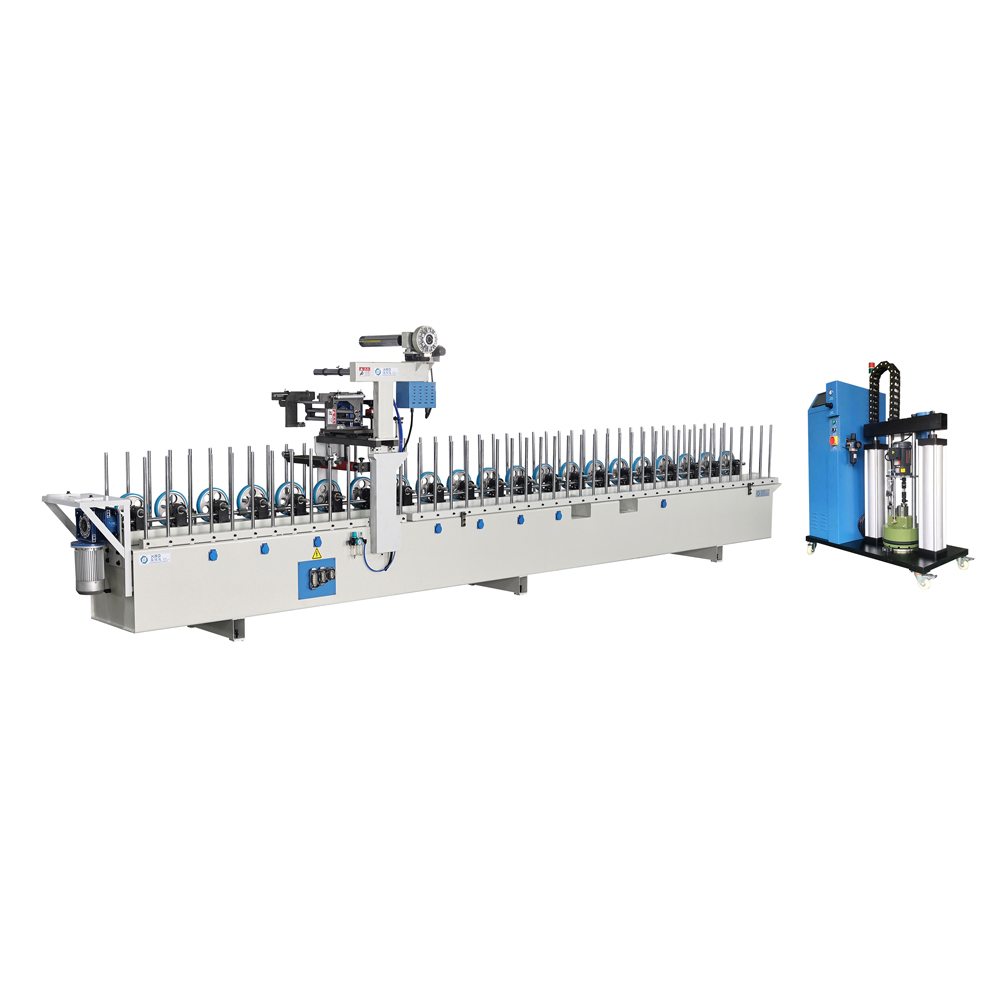
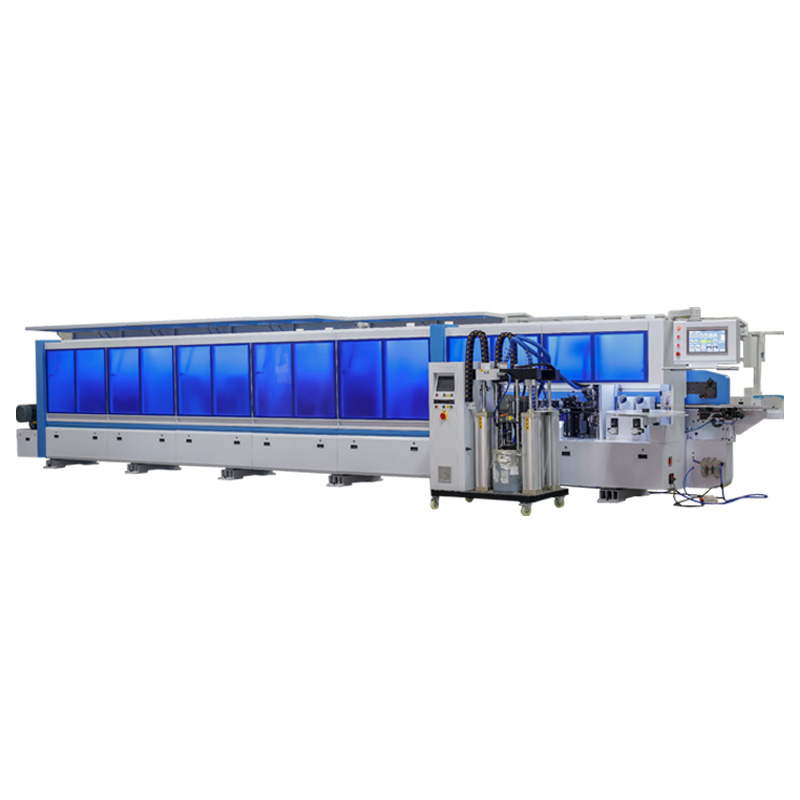
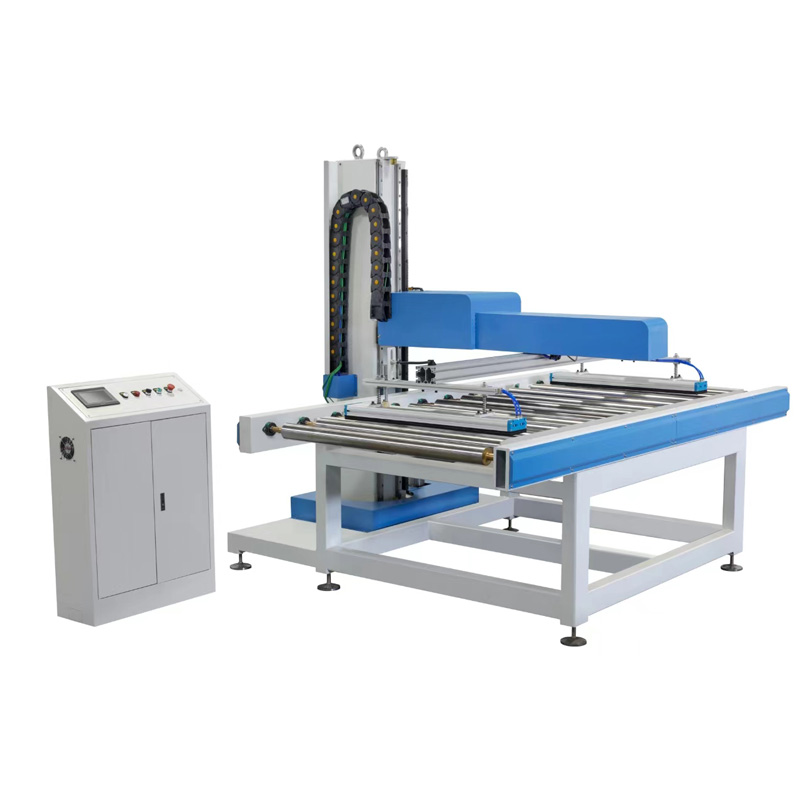
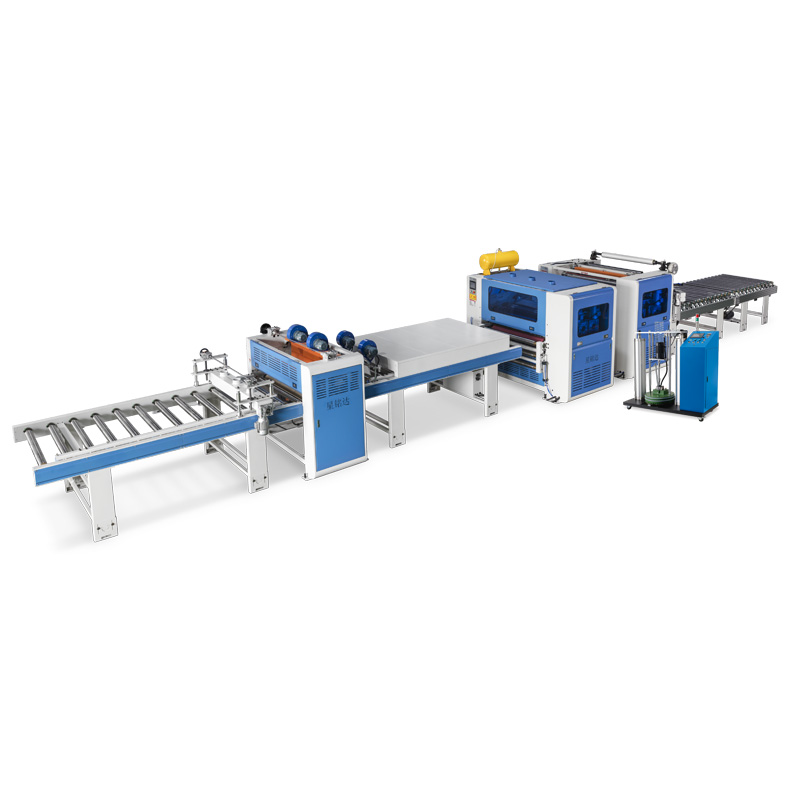
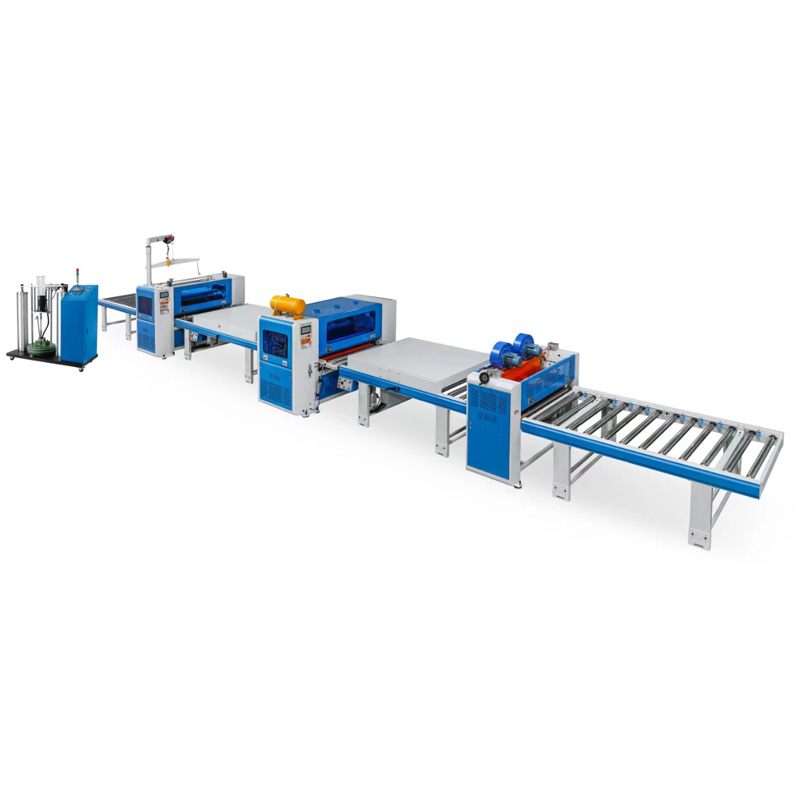
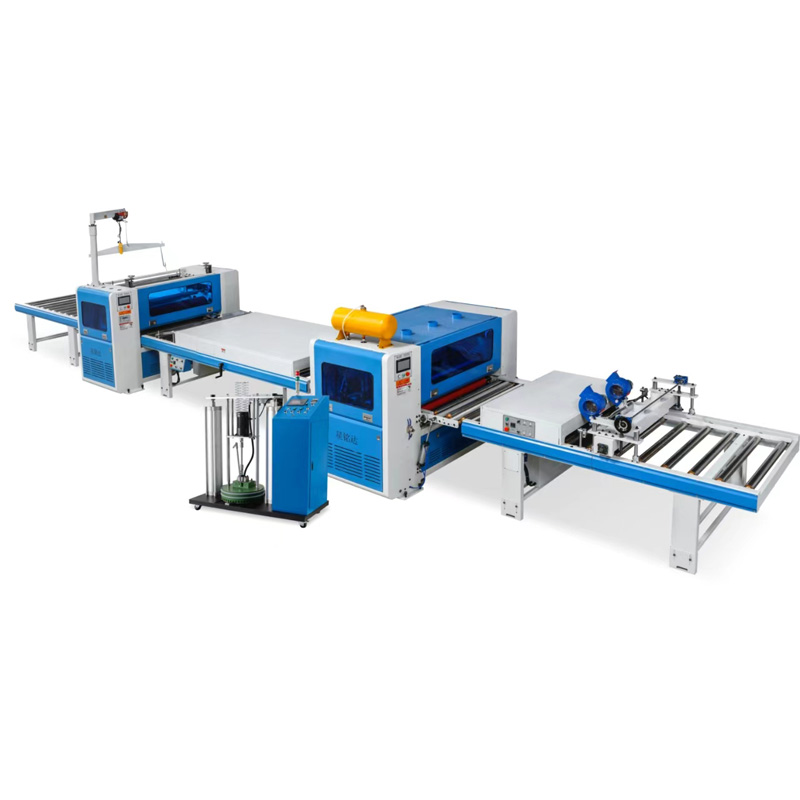
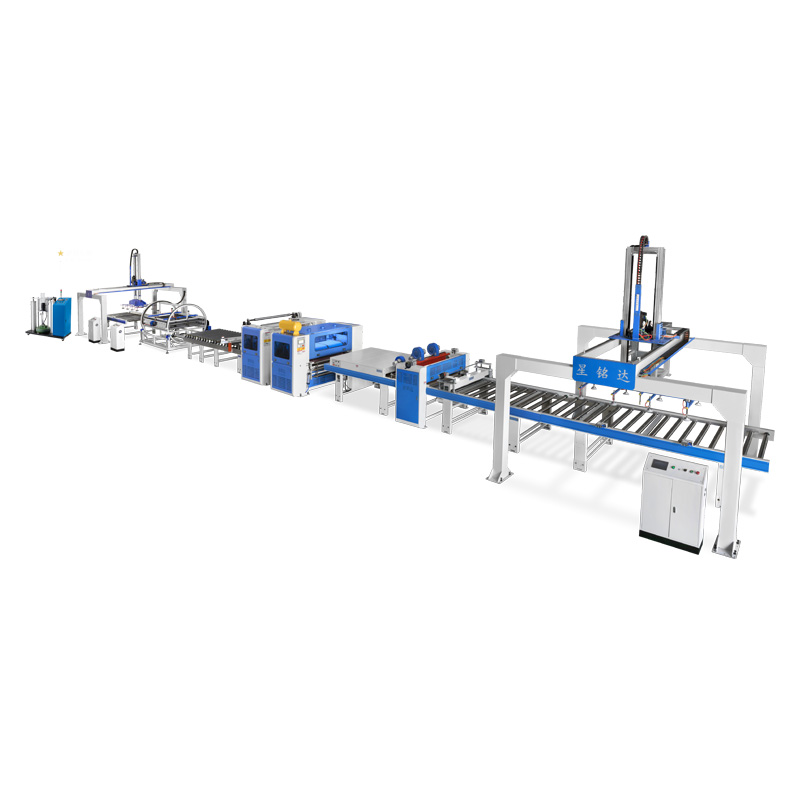
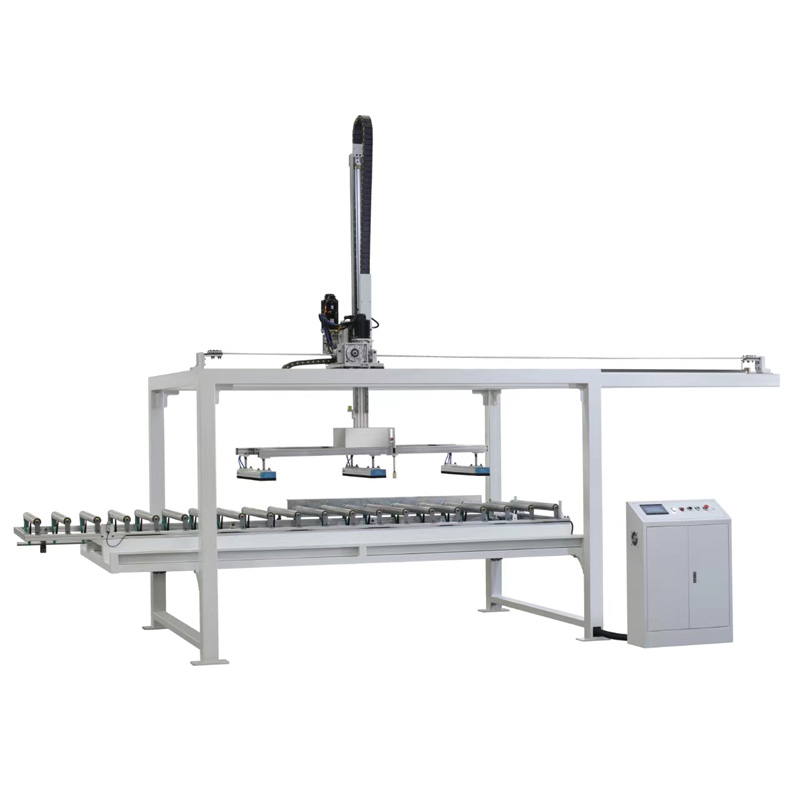
For WPC wall panels, decorative boards and profile-based interior products, surface appearance is only half of the quality equation. The other half is what happens underneath the decorative layer.
A panel may look perfect when it leaves the production line, yet bubbles can appear after storage, edges may begin to peel during installation, or the wrapped film may lose adhesion when exposed to temperature and humidity changes. These failures can quickly turn into rework, scrap and customer complaints.
This is why more panel manufacturers are evaluating a 600mm PUR panel wrapping machine rather than relying on conventional wrapping processes with inconsistent glue application and pressure control.
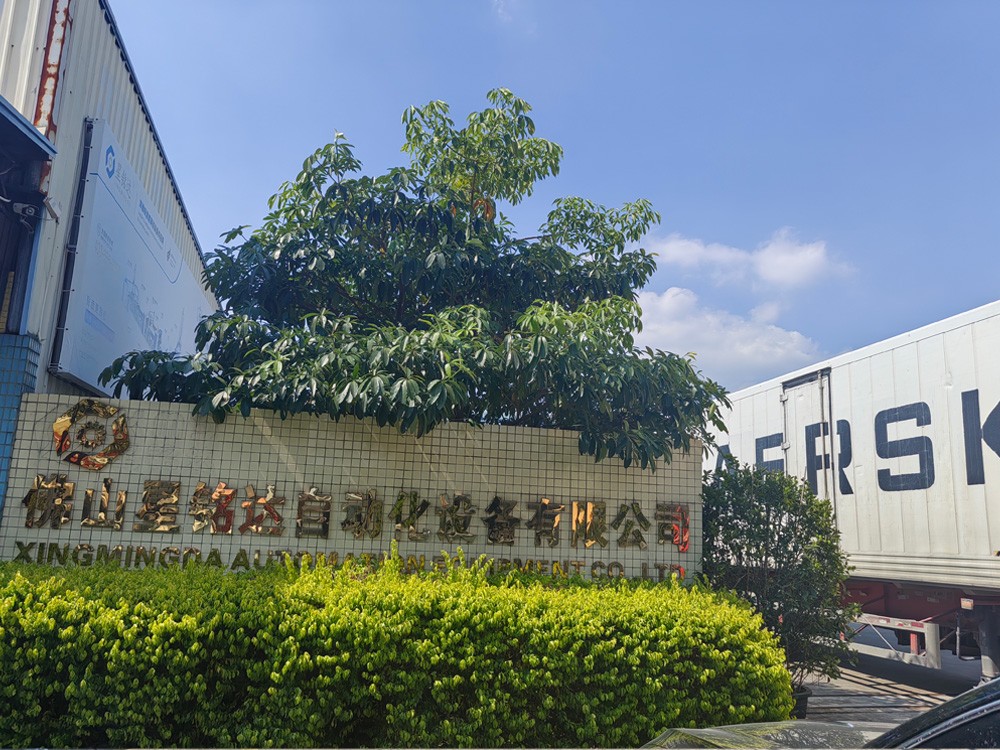
Designed for demanding decorative panel applications, the equipment from Xingmingda automatic Woodworking machinery Co.,Ltd combines controlled PUR adhesive application, stable heating, synchronized conveying and uniform pressing to create a more consistent wrapping process.
The goal is straightforward: better bonding, fewer bubbles, stronger edges and more stable production quality.
1. Why Do WPC and Decorative Panels Still Suffer from Bubbling and Edge Peeling?
Traditional panel wrapping looks simple: apply adhesive, place the decorative material, press it against the substrate and complete the wrapping process.
In actual production, however, several variables can affect bonding quality.
Uneven adhesive application
If the glue layer is too thin, the decorative material may not achieve sufficient bonding strength.
If it is too thick, excessive adhesive can increase cost and may create uneven surfaces or curing problems.
For manufacturers, the challenge is not simply applying “more glue,” but maintaining a stable and appropriate adhesive layer across the working width.
Trapped air and bubbling
Air can become trapped between the decorative layer and substrate during wrapping.
This is particularly problematic when:
Panel surfaces are large
Decorative films are thin
Adhesive distribution is uneven
Pressing pressure is inconsistent
Production speed changes frequently
A small bubble may initially appear insignificant, but temperature changes can cause it to expand and become highly visible.
Edge peeling
Panel edges are often more difficult to wrap than flat surfaces.
Insufficient adhesive coverage, unstable pressure or incorrect process parameters can result in edge lifting or peeling.
For WPC and decorative wall panels, where visual quality is a major selling point, edge defects can directly affect finished-product acceptance.
Environmental resistance
Decorative panels may be exposed to variations in temperature and humidity during transportation, storage and installation.
A wrapping process therefore needs to provide not just immediate adhesion, but a stable bonding structure after curing.
This is where PUR adhesive technology becomes particularly attractive.
2. Why Choose a 600mm PUR Panel Wrapping Machine?
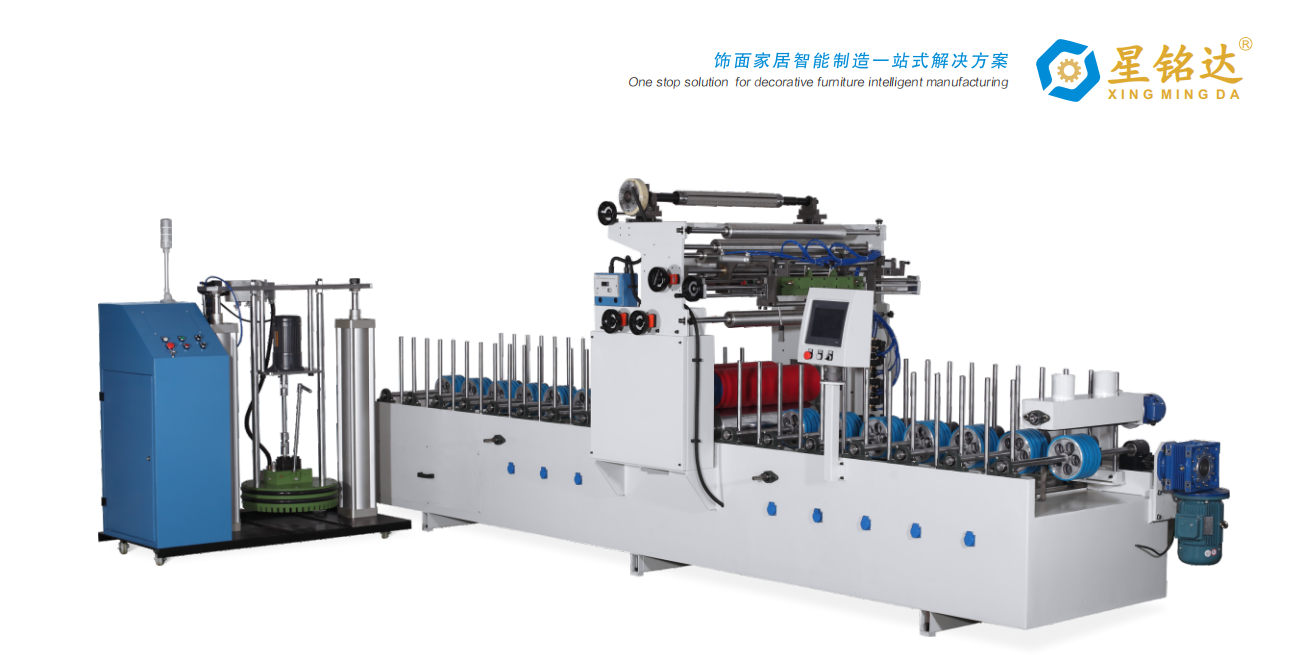
The 600mm PUR panel wrapping machine is designed around a key production requirement: maintaining consistent adhesive application and pressure while allowing manufacturers to process different decorative panel materials.
The 600mm working width provides a practical configuration for many panel and profile wrapping applications.
Instead of treating the machine as a simple wrapping unit, manufacturers should evaluate it as a complete process-control system.
The core process can be understood as:
Panel Feeding → Surface Preparation → PUR Adhesive Application → Decorative Material Positioning → Profile/Panel Wrapping → Uniform Pressing → Curing
Each stage affects the final bonding result.
For Xingmingda automatic Woodworking machinery Co.,Ltd, equipment development focuses on matching mechanical performance with real production requirements.
3. How Does PUR Wrapping Help Reduce Bubbling?
PUR hot melt adhesive behaves differently from many conventional adhesive systems.
When correctly processed, PUR can provide strong initial bonding and develop further bonding strength through moisture-curing reactions.
However, the adhesive itself cannot solve every production problem.
The machine must also control the process.
A pur lamination anti-bubbling solution should therefore address three key factors:
1. Adhesive quantity
The adhesive application system needs to deliver a controlled and consistent amount of PUR.
Too little adhesive can create weak bonding areas.
Too much adhesive can increase material consumption and may negatively affect the finished surface.
2. Temperature stability
PUR adhesive needs to be processed within an appropriate temperature range specified by the adhesive supplier.
Overheating can affect adhesive performance, while insufficient heating can increase viscosity and make application unstable.
A stable heating and temperature-control system therefore becomes an important part of the wrapping process.
3. Pressing consistency
Even when the adhesive is applied correctly, inconsistent pressing can create bonding differences across the panel.
The wrapping system needs to maintain stable material movement and appropriate pressure during the bonding stage.
These three elements work together to create a reliable pur lamination anti-bubbling process.
4. Technical Parameters Buyers Should Evaluate
When comparing a 600mm PUR panel wrapping machine, buyers should look beyond the working width.
The following parameters deserve attention:
| Parameter | What Buyers Should Check | Production Value |
|---|---|---|
| Working width | Up to 600 mm configuration | Supports common panel/profile applications |
| Adhesive type | PUR hot melt adhesive | Suitable for high-performance bonding |
| Glue application | Controlled application system | Helps maintain adhesive consistency |
| Heating | Stable temperature control | Reduces viscosity fluctuation |
| Pressing | Continuous and uniform pressure | Supports stronger surface bonding |
| Feeding | Synchronized material conveying | Improves wrapping consistency |
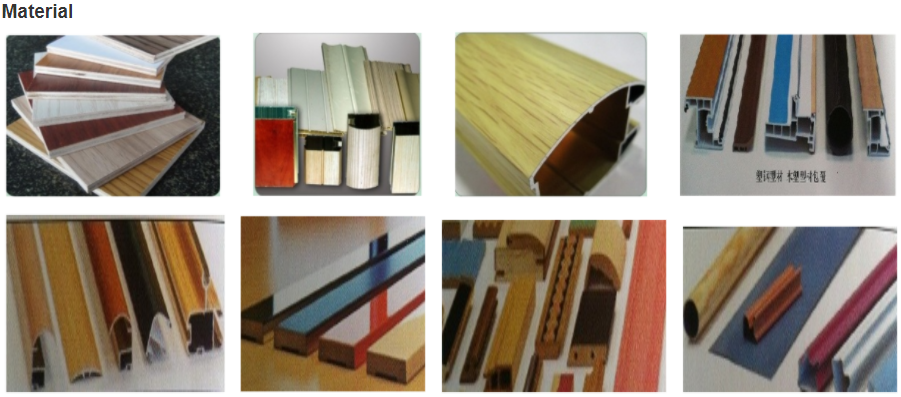
| Material compatibility | WPC, MDF and decorative panels | Supports multiple product categories |
| Operation | Centralized control | Simplifies production adjustment |
| Maintenance | Accessible key components | Helps reduce service downtime |
Actual machine specifications should be configured according to the adhesive system, substrate, decorative material, profile geometry and production speed.
This is an important purchasing principle: the best wrapping machine is not necessarily the machine with the highest nominal speed; it is the machine that maintains stable quality at your required production speed.
5. Application Scenarios: Where Can a PUR Wrapping Machine Add Value?
The pur wrapping machine for WPC panel is particularly suitable for manufacturers producing decorative and architectural panel products.
WPC Wall Panels
WPC panels are increasingly used for interior decorative applications.
Their surfaces may be wrapped with decorative films to achieve wood, stone, fabric or other visual effects.
A stable PUR bonding process helps manufacturers improve surface appearance while reducing the risk of film lifting.
MDF Decorative Panels
MDF provides a uniform substrate for decorative wrapping.
The machine can be integrated into production processes for furniture components, wall panels and other decorative products.
Interior Wall Panels
For wall panel manufacturers, appearance consistency is critical.
Small bubbles, wrinkles or edge peeling can become highly visible after installation.
A controlled wrapping process can therefore contribute directly to finished-product quality.
Decorative Profiles
Profiles and shaped components can present more complicated wrapping conditions than flat panels.
A customized machine configuration can be developed around the profile geometry and required wrapping process.
6. What Production Problems Can the Machine Help Address?
A manufacturer considering a 600mm PUR panel wrapping machine should first identify the specific problems affecting its current production.
Problem 1: Excessive rework
If operators frequently need to rework panels because of bubbles or incomplete bonding, production capacity is effectively reduced.
Problem 2: High adhesive consumption
Uncontrolled manual or semi-manual glue application can create unnecessary adhesive consumption.
A controlled application system can help manufacturers establish a more consistent process.
Problem 3: Inconsistent edge quality
Different operators may apply different pressure or use different handling methods.
Automation reduces dependence on individual operator technique.
Problem 4: Unstable production quality
Temperature, adhesive viscosity, feeding speed and pressing conditions can interact.
A coordinated machine configuration makes these variables easier to manage.
7. How Should Manufacturers Evaluate Production Yield?
Claims such as “zero bubbling” or “100% qualified rate” should be treated carefully.
Actual yield depends on:
Substrate quality
Decorative film
PUR adhesive formulation
Ambient humidity
Panel geometry
Machine parameters
Operator setup
Curing conditions
A more practical approach is to compare production data before and after equipment optimization.
For example, a factory can track:
| KPI | Before Upgrade | Target After Optimization |
|---|---|---|
| First-pass yield | 90–94% | 96–99% |
| Rework rate | 6–10% | 1–4% |
| Adhesive waste | Baseline | 5–15% lower* |
| Bubble-related defects | Baseline | 30–60% lower* |
| Edge-peeling complaints | Baseline | 30–50% lower* |
| Manual handling points | Multiple | Reduced |
*Illustrative engineering targets, not guaranteed machine performance. Actual results should be validated through sample testing with the customer's specific substrate, film and PUR adhesive.
For professional procurement, sample production is more valuable than a brochure promise.
8. Why Is Sample Testing Important Before Purchasing?
A pur wrapping machine for WPC panel should not be selected only from photographs, machine dimensions or a quoted price.
Different WPC formulations, decorative films and adhesives behave differently.
Before placing an order, manufacturers should provide:
WPC or MDF sample panels
Decorative film or finishing material
PUR adhesive specification
Required panel dimensions
Target production speed
Required wrapping geometry
The supplier can then evaluate:
Adhesive application
Heating conditions
Feeding stability
Wrapping quality
Edge bonding
Surface appearance
Curing performance
This approach gives purchasing managers much stronger evidence for investment decisions.
9. Why Choose Xingmingda Automatic Woodworking Machinery?
Xingmingda automatic Woodworking machinery Co.,Ltd focuses on woodworking automation equipment and provides machinery solutions for panel processing and wrapping applications.
For customers looking for a 600mm PUR panel wrapping machine, supplier capability should be evaluated from several perspectives.
Engineering capability
A reliable manufacturer should understand not only the machine itself, but also the relationship between:
Substrate + Adhesive + Decorative Material + Temperature + Pressure + Speed
Changing one variable can affect the final result.
Customization capability
Different factories may have different:
Panel widths
Production speeds
Workshop layouts
Decorative materials
Profile geometries
Upstream and downstream equipment
A supplier capable of adapting the equipment to the production environment can provide more practical value than a standard machine supplier.
Production support
Equipment performance is only one part of the project.
Installation, commissioning, operator training and process adjustment also affect the final production result.
10. Procurement Checklist for a 600mm PUR Panel Wrapping Machine
Before sending an RFQ, manufacturers should prepare the following information.
Product Information
Panel material
Panel thickness
Maximum panel width
Panel length
Flat or shaped profile
Decorative material type
Adhesive Information
PUR adhesive brand
Recommended application temperature
Adhesive viscosity
Required adhesive quantity
Curing conditions
Production Requirements
Target output per hour
Working hours per day
Number of product specifications
Expected changeover frequency
Required automation level
Factory Information
Available floor space
Existing equipment
Power supply
Production-line direction
Required upstream/downstream connection
With this information, suppliers can provide a much more accurate equipment configuration and quotation.
11. Building a More Reliable Panel Wrapping Production Line
The real value of a 600mm PUR panel wrapping machine becomes clearer when it is connected with the rest of the factory.
A modern production workflow can be organized as:
Panel Processing → Cleaning → PUR Adhesive Application → Decorative Wrapping → Pressing → Inspection → Cutting → Packaging
This reduces unnecessary manual handling and creates a more standardized production environment.
For high-volume manufacturers, such integration can help improve:
Material flow
Production consistency
Labor utilization
Workshop cleanliness
Quality traceability
Overall production efficiency
The machine can therefore become more than a standalone wrapping device—it can become part of a broader automated panel production strategy.
12. FAQ
What materials can a PUR panel wrapping machine process?
Depending on the machine configuration, applications can include WPC panels, MDF boards, decorative panels and other compatible substrates. Sample testing is recommended before confirming the final configuration.
Can the machine reduce bubbling?
A properly configured PUR wrapping process can significantly reduce bubbling risks by controlling adhesive application, temperature, feeding and pressing. However, the final result also depends on adhesive and substrate conditions.
Is a 600mm working width suitable for WPC wall panels?
It can be suitable for many WPC and decorative panel applications. The correct configuration should be determined according to the customer's actual panel width and profile geometry.
Why use PUR adhesive for panel wrapping?
PUR hot melt adhesive can provide strong bonding performance and moisture-curing characteristics, making it attractive for demanding decorative panel applications.
What should I provide when requesting a quotation?
Provide panel dimensions, substrate material, decorative material, adhesive specifications, target production speed and desired wrapping configuration. This allows the supplier to recommend a more accurate solution.
Turn Your Panel Wrapping Process into a More Stable Production System
Bubbles, edge peeling and inconsistent adhesive application are rarely caused by one factor alone. They are usually the result of several process variables working together.
That is why choosing a pur wrapping machine for WPC panel should involve more than comparing prices and machine dimensions.
A reliable production solution should provide:
Controlled PUR application + stable heating + consistent pressing + accurate conveying + application-specific engineering.
The 600mm PUR panel wrapping machine from Xingmingda automatic Woodworking machinery Co.,Ltd is designed to help manufacturers build a more controlled and repeatable wrapping process for WPC, MDF and decorative panels.
If your factory is struggling with bubbling, edge peeling, adhesive waste or inconsistent panel quality, contact us with your product specifications and production requirements.
Xingmingda automatic Woodworking machinery Co.,Ltd can evaluate your application and recommend a suitable PUR wrapping configuration based on your actual materials and production targets.
Learn more: www.purmachinefactory.com
Email: pattypeng@purmachinefactory.com